March 6, 2026
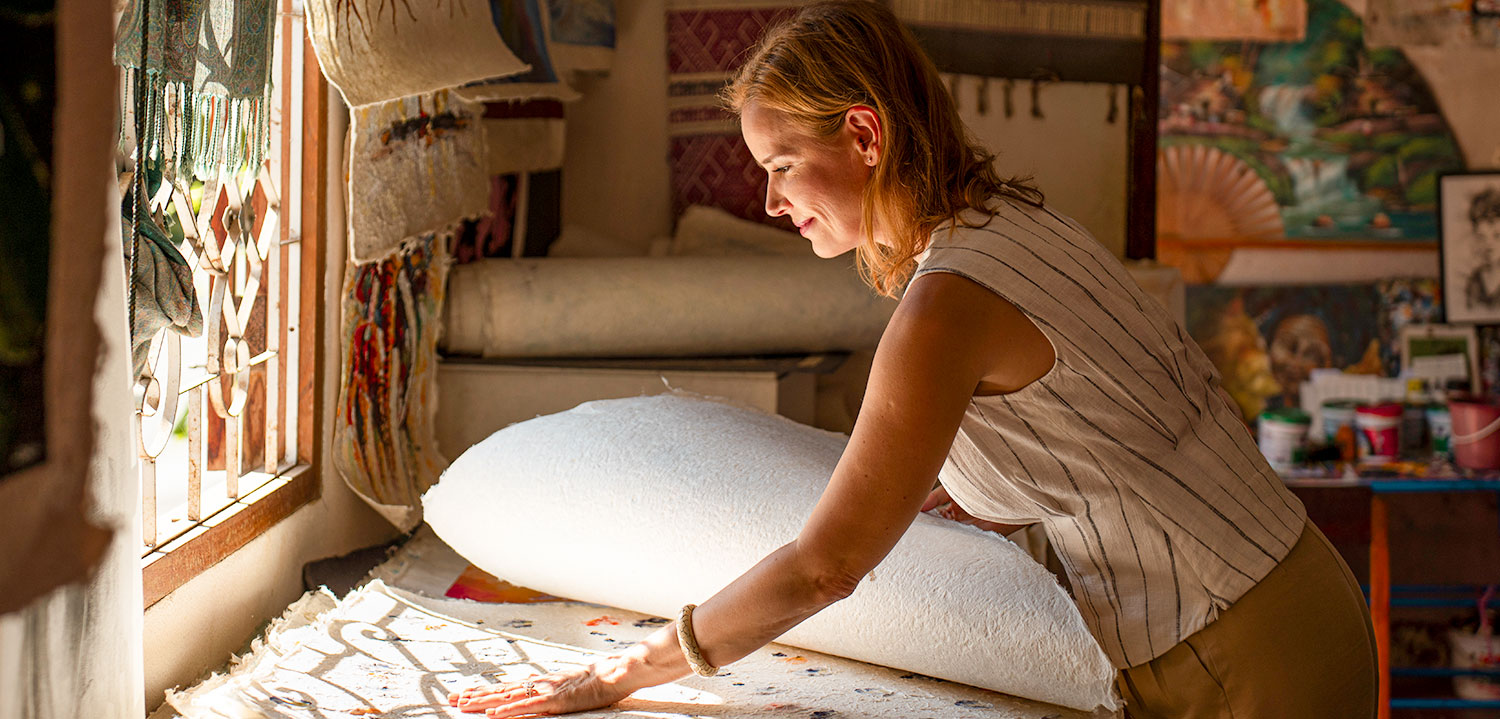
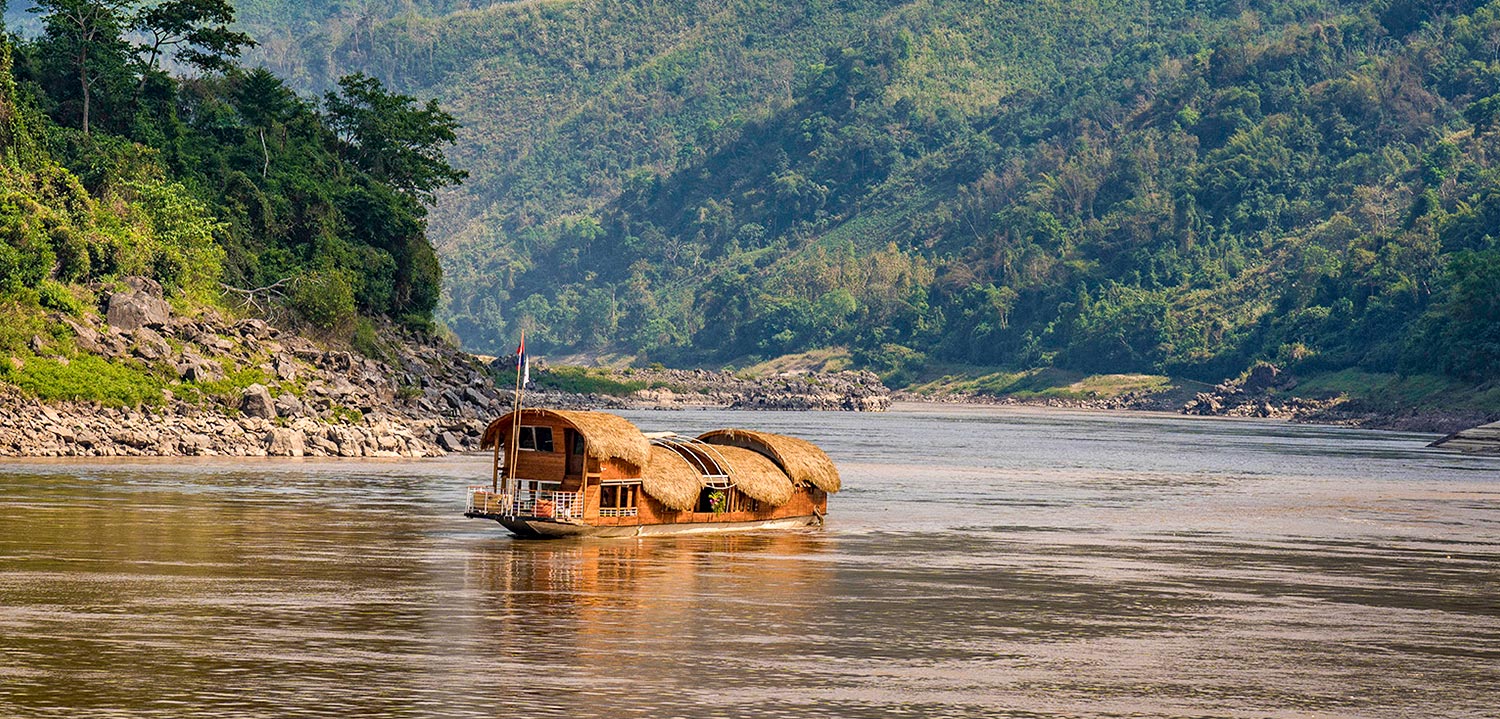
As the Bohème glides gracefully upstream from Luang Prabang, the rhythmic sounds of the river are often joined by a distant, rhythmic thumping from the shore. This marks our arrival near Ban Xang Khong, affectionately known as the “Paper Village.”
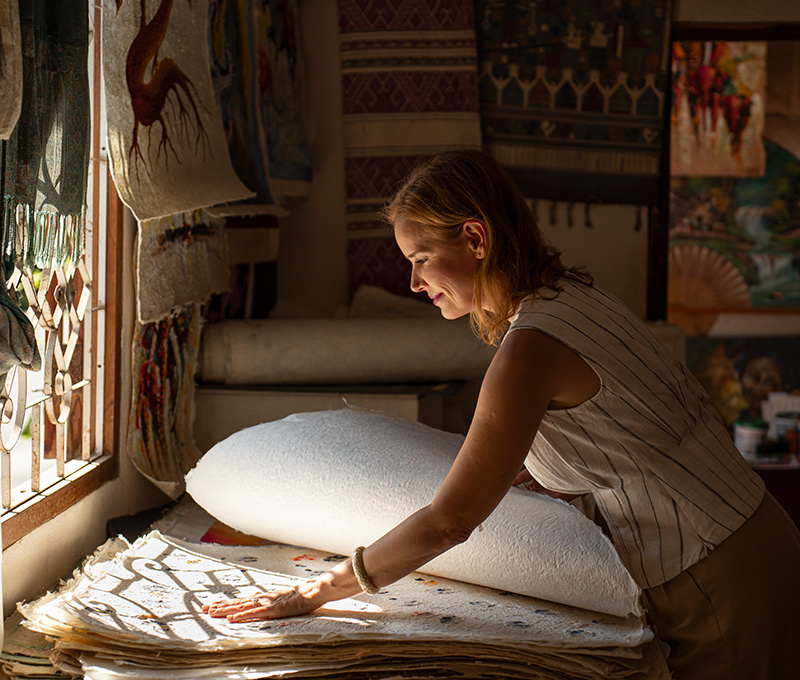
While the village is famous for its traditional weaving, it is the ancient art of Saa paper making that truly defines its identity. For centuries, the local artisans here have transformed the humble bark of the mulberry tree into delicate, floral-flecked sheets that carry the history of Laos on their surface.
The story of Ban Xang Khong begins with the Sa (mulberry) tree. Unlike other forms of paper production that require cutting down entire trees, Saa paper is sustainable. Artisans simply harvest the outer branches, leaving the tree to regrow.
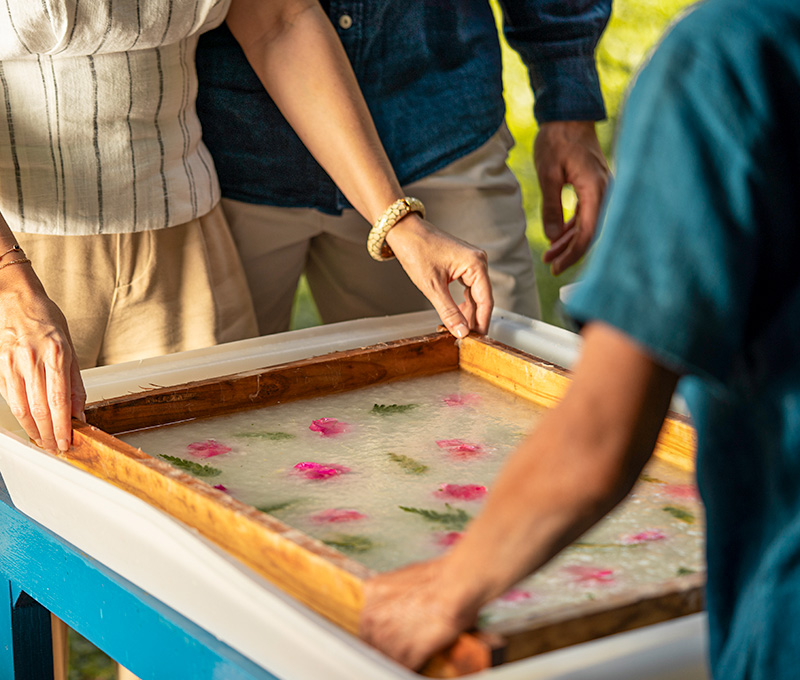
In the village, you will see these branches soaking in large vats to soften the bark. Once stripped and boiled, the bark is pounded into a thick, fibrous pulp. While some modern workshops now use machinery to assist with the mincing, the core of the process remains beautifully manual. The pulp is spread across fine mesh screens submerged in water, creating a thin, even layer that will eventually become a sheet of paper.
Walking through the village, you might spot something fascinating drying in the sun: translucent, skeleton-like leaves. These are often called “Buddha leaves.”
The process to create them is a testament to Lao patience. The leaves are soaked for up to three months until the green chlorophyll softens. Artisans then use a simple toothbrush to meticulously scrape away the organic matter, leaving behind only the intricate, lace-like veins. These ghostly skeletons are then dyed and pressed into the wet paper pulp, creating the stunning floral patterns that make Ban Xang Khong paper world-famous.
When you travel with Mekong Kingdoms, we don’t just want you to observe; we want you to create. Our itinerary includes a curated stop in the heart of the Paper Village, where the scent of woodsmoke and drying pulp fills the air.
By visiting Ban Xang Khong, you are supporting a community that prioritizes slow, ethical production. The village women often work from home so they can care for their children.
As the sun begins to set and we return to the Bohème, you’ll carry with you more than just a souvenir. You’ll hold a piece of the Mekong’s soul, crafted from the very trees that line its banks.